
House Demolition in Sydney
Demolishing a house in Sydney is rarely a wide open job. Blocks are narrow, neighbours are close and streets are busy. We plan each demolition around access, approvals, neighbouring properties and traffic, remove any asbestos first, then take the house down in a controlled order and leave a clean, level block.
- Hazardous materials survey before work starts
- Asbestos handled by SafeWork NSW licensed removalists
- Dilapidation reports on neighbouring properties
- Dust, noise and traffic planned for city streets
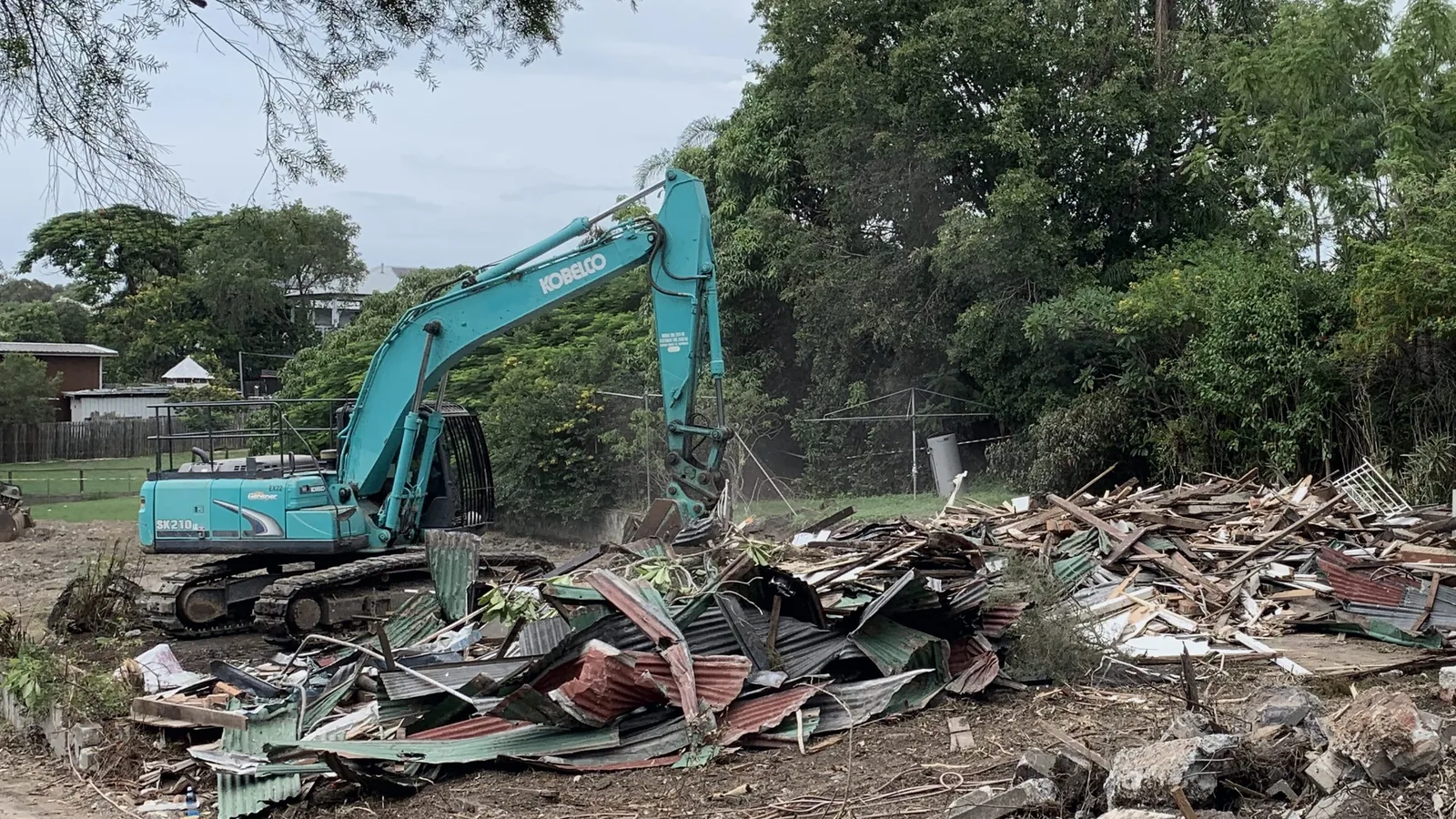
Demolition starts with a plan, not a machine
On a city block, most of the work happens before the excavator arrives. We look at the site, the neighbours, the street and the approvals, then set the order of work. A clear sequence keeps the job safe, keeps neighbours informed and stops small problems turning into delays.
A typical house demolition runs like this:
- Approval confirmed, either a Complying Development Certificate or a development consent from council
- Hazardous materials survey of the house
- Dilapidation reports on neighbouring properties
- Service disconnections and a Before You Dig Australia check
- Asbestos removed and a clearance certificate issued
- Soft strip of fittings, then the structure taken down
- Footings, slabs and driveways broken out, and the block levelled
Approvals: CDC or DA
In NSW, a house demolition is either Complying Development or needs a Development Application. A Complying Development Certificate can be issued by council or a registered certifier under the Exempt and Complying Development Codes SEPP when the property meets the standards. Heritage items, and many homes in heritage conservation areas, usually need a DA instead. Across the Inner West, Woollahra, Hunters Hill and Ku-ring-gai that is common, so we check the planning controls early and work to the conditions of whichever approval applies.
Hazardous materials survey
Homes built before 1990 may contain asbestos in fibro sheeting, eaves, wet-area linings, vinyl floor backing, roofing and old flues. Older houses can also hold lead paint and synthetic mineral fibre insulation. A hazardous materials survey identifies what is there and where, so it can be removed before the structure comes down. Demolishing over asbestos is not an option.
Neighbours and dilapidation reports
Many Sydney houses sit a metre or two from the next building. Some share a wall with it. Before work starts, we arrange dilapidation reports on the neighbouring properties. Each report records existing cracks, finishes and fences with photos, so there is a clear baseline if a question comes up later. Neighbours are told when work starts, what the noisy stages are and who to speak to on site.
Services and site safety
Electricity is disconnected through the distributor (Ausgrid across the inner, eastern and northern areas), water and sewer through Sydney Water, and gas through Jemena. Telecommunications are disconnected as well. A Before You Dig Australia check is done before any excavation, so buried assets are located before footings and slabs come out. The site is fenced, signed and secured before demolition begins.
Access on tight blocks
Plenty of Sydney homes have no side access at all. The machine may need to come through the front, over a retaining wall or from a rear lane. We size the plant to the block, which can mean a smaller excavator, hand demolition near boundaries and more truck movements with smaller loads. Where a skip, work zone or truck needs council land, we apply for the permits under the council's kerbside rules before the start date.
Traffic, pedestrians and the street
Narrow streets, school zones, bus routes and parked cars all affect how trucks get in and out. For sites that need it, a traffic and pedestrian management plan sets truck timing, spotters, footpath protection and any closures. On busy streets that plan is often the difference between a smooth week and a stalled one.
Dust and noise control
Dust is kept down with water as the structure comes apart, and loads are covered before they leave. Noisy work is kept to the hours set in the approval conditions. Machines are not left idling, and the noisiest stages are flagged to neighbours in advance.
Taking the house down
Once the house is stripped of fittings and hazardous materials, the structure comes down in a controlled order, roof first and then walls, working away from neighbours where possible. Brick, concrete, timber and metal are separated as they come out so they can go to recycling rather than landfill. Footings, slabs, paths and driveways are broken out, and the block is left level and ready for the builder, surveyor or geotechnical engineer.
What to send us
Send the address, a few photos of the front, back and sides, and any approval documents or plans you already have. If you know roughly when the house was built, include that too. We will come back with questions about access and timing, then a written quote.
Why choose us for house demolition
- Hazardous materials survey before the structure is touched
- Dilapidation reports on neighbouring properties
- Plant sized for blocks with no side access
- Traffic, pedestrian and kerbside permits arranged early
- Dust and noise managed to approval conditions
- Block left level and ready for the builder
House Demolition: common questions
Do I need approval to demolish my house?
Yes. In NSW, demolition is either Complying Development, approved with a CDC from council or a registered certifier, or it needs a Development Application to council. Heritage items and many homes in heritage conservation areas usually need a DA.
Can you demolish a house with no side access?
Usually, yes. We size the machine to the block, which may mean a smaller excavator coming in from the front or a rear lane, hand demolition near boundaries, and more truck movements with smaller loads.
What happens to the materials?
Brick, concrete, timber and metal are separated as the house comes down so they can be recycled where practical. Asbestos is handled separately and only goes to a facility lawfully able to accept it.
Who disconnects the services?
Electricity is disconnected through the distributor, water and sewer through Sydney Water, gas through Jemena, and telecommunications through the provider. We line these up in the right order so the start date holds.
Planning a demolition or strip-out in Sydney?
Send us the address and a few photos. We will look at access, neighbours and approvals, then come back with a written quote.